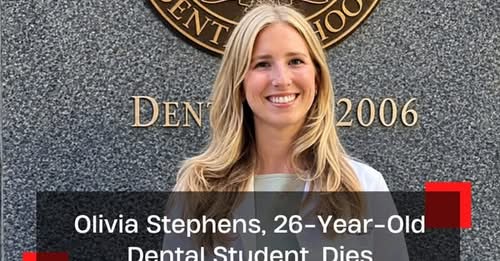
However, the circulating death reports have been refuted, and there is currently no credible evidence establishing that Olivia Stephens has died.
Is Olivia Stephens Dead?
There is no credible evidence currently establishing that Maryland resident Olivia Stephens has died.
The reports circulating online have instead been challenged as inaccurate.
That distinction is important.
A person's name appearing alongside words such as “obituary,” “death” or “cause of death” in search results does not prove that the individual has passed away.
Without confirmation from family members, a funeral provider, authorities or another reliable source, such claims should not be repeated as fact.
Olivia Stephens Death Reports Refuted
The current story concerns the refutation of a death report, rather than confirmation of a death.
Online misinformation can spread quickly when websites and social-media accounts repeat information without identifying the original source.
Once several pages reproduce the same claim, it can appear as though multiple sources have independently confirmed the story.
In reality, they may all be repeating one unsupported report.
That appears to be the central concern surrounding the Olivia Stephens claim.
No Confirmed Olivia Stephens Obituary
No independently verified obituary establishing Olivia Stephens' death has been identified in connection with the viral claim.
Publishers should therefore avoid presenting headlines such as:
“Olivia Stephens Obituary”
“Olivia Stephens Cause of Death”
Doing so could reinforce misinformation about a living person.
The current report identifies Olivia Stephens as being associated with Maryland.
Beyond that, independently verified biographical information connecting a specific person to this death rumor remains limited.
There are multiple people named Olivia Stephens.
For that reason, photographs, employment information, school records, family details or social-media accounts should not be attached to this story unless there is clear evidence that they belong to the same person.
Mistaken identity can turn an inaccurate death rumor into a much more harmful story.
Olivia Stephens Cause of Death
There is no cause of death to report because Olivia Stephens' death has not been credibly established.
Any website claiming that she died from an accident, illness, shooting, suicide or another cause should provide authoritative evidence supporting that assertion.
Without such evidence, assigning a cause of death would be speculation.
No Confirmed Date of Death
There is also no verified date of death.
The publication of online articles in October 2026 does not establish that a death occurred during October.
In this case, the more fundamental issue is that the alleged death itself has not been substantiated.
A publication date should therefore never be converted into a supposed date of death.
No Verified Funeral Arrangements
There are no legitimate funeral or memorial arrangements to report in connection with the refuted Olivia Stephens death claim.
Publishers should not create a funeral date, visitation location, burial site or memorial service.
Likewise, funeral information belonging to another person named Olivia Stephens should not be attached to this story.
How Death Hoaxes Spread Online
Death hoaxes can begin with a single post.
Someone may publish an unsupported claim on social media or a website.
Other accounts then copy the information.
Search engines begin displaying pages containing the person's name alongside terms such as “dead,” “obituary” and “cause of death.”
People searching the name may then assume that the number of results represents confirmation.
If those websites are copying one another, there may still be only one original—and potentially inaccurate—source.
False death reports can cause serious emotional distress.
Relatives and friends may encounter posts claiming that someone they know has died.
The person targeted by the rumor may also be forced to reassure others that they are alive.
For news publishers, verification is therefore particularly important before publishing an obituary.
An obituary should follow confirmation of a death rather than serve as evidence that the death happened.
What Readers Should Check
When a death involving a private individual is reported online, readers should look for an identifiable source.
A family announcement can provide confirmation.
A funeral-home obituary can provide confirmation.
In cases involving accidents or crimes, police, coroners and medical examiners may provide confirmation.
Established local news organizations may also independently verify the information.
A collection of anonymous or nearly identical websites should not automatically be treated as equivalent evidence.
The circulating report associates Olivia Stephens with Maryland.
However, a specific Maryland city, county, employer, school or other personal detail should not be added without verification.
Doing so could unintentionally direct the rumor toward an unrelated person with the same name.
Until the identity involved in the original rumor is clearly established, keeping personal information limited is the responsible approach.
Online reports alleging that Olivia Stephens died have circulated.
The person involved is reportedly associated with Maryland.
The death claim has been refuted.
No credible obituary establishing her death has been identified.
No verified cause of death exists.
No confirmed death date has been established.
No legitimate funeral arrangements have been connected to the claim.
Detailed biographical information should not be attached to the story without confirming the identity of the person involved.
The appropriate description is therefore a refuted or unsupported death report, not a confirmed obituary.
Final Update on Olivia Stephens
Readers searching for information about Olivia Stephens should be cautious about articles presenting her death as established fact.
At this stage, there is no reliable basis for publishing an obituary or cause-of-death story about the Maryland resident named in the circulating reports.
The available information instead indicates that the viral death claim has been refuted.
Unless credible new evidence emerges, publishers should correct rather than amplify the rumor.