GM finds splitscreen solution for CarPlay and Android Auto
That should keep these infotainment systems from hogging all the important screen real estate.
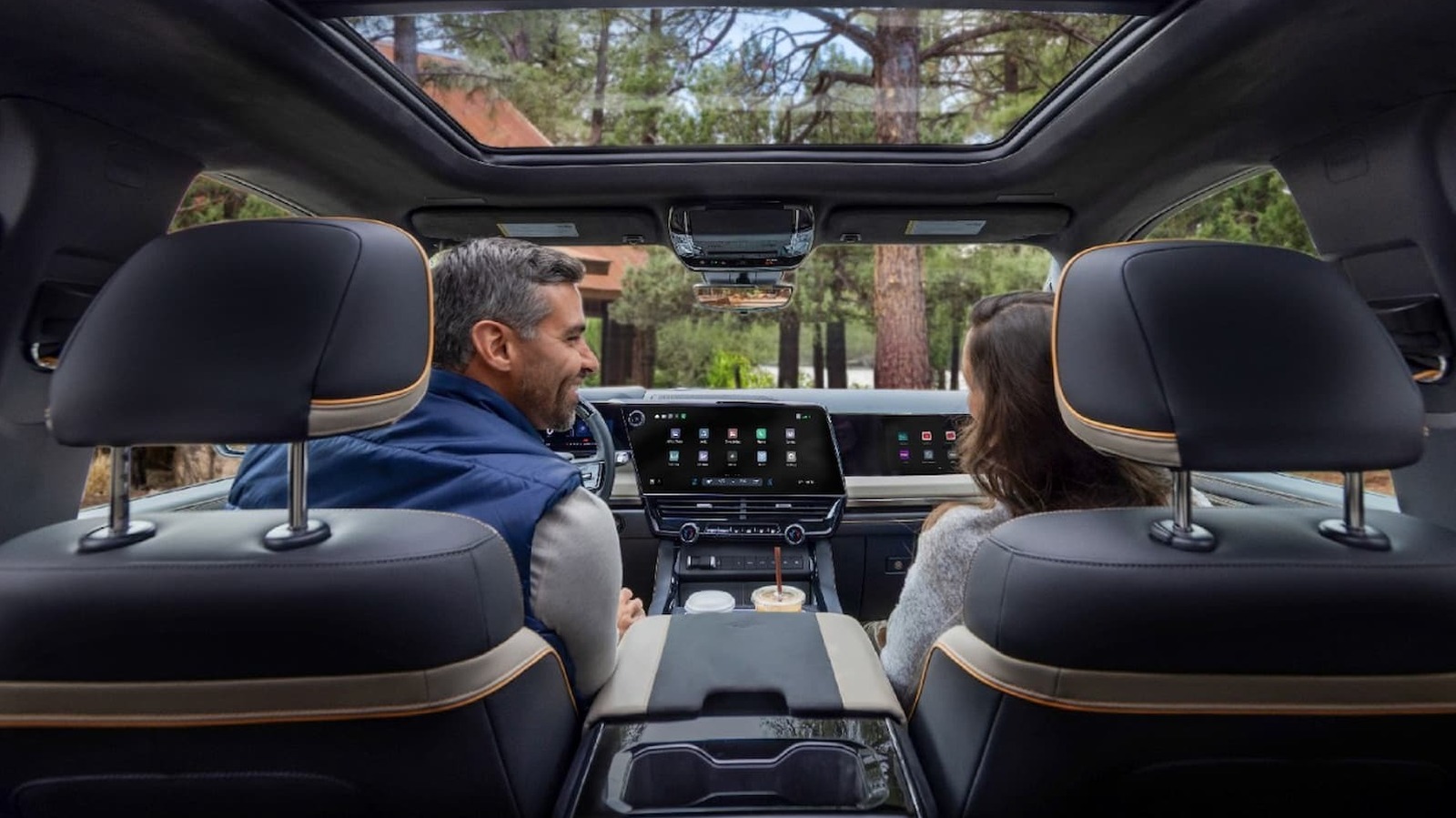
A new UI that features the interfaces will debut in the 2027 Chevrolet Silverado and GMC Sierra pickups.
General Motors is sticking with CarPlay and Android Auto in its gas-powered vehicles for the time being, and it shed some light on how they work in its revamped infotainment system. This new user interface will first be available in the 2027 Chevrolet Silverado and 2027 GMC Sierra pickup trucks. It will be available on other models later.
Including a display on which a passenger in the front seat can stream video, these trucks have 60 inches of screen real estate. GM is taking advantage of that space by offering CarPlay and Android Auto in a splitscreen view. As such, drivers will be able to access CarPlay and Android Auto functions while still being able to see vehicle gauges. They won't necessarily have to swap screens, which may help reduce distractions. GM told Bloomberg it worked with Apple and Google on this approach.
"We were one of the first automakers to bring Apple CarPlay and Android Auto into our gas-powered vehicles. Now with the new UI, we've integrated the experience more deeply than ever before in our light-duty pickups," Mike Wahlstrom, GM's executive director of software product management, said in a Q&A. "People really like CarPlay and Android Auto because they're so user-centric. We heard from customers that they want that same simplicity while still having quick access to everything their vehicle can do. Our next-gen UI brings those together in a cohesive way."
The company announced three years ago that it would ditch CarPlay and Android Auto from electric vehicles in favor of a bespoke infotainment system that uses Gemini. CEO Mary Barra suggested to The Verge in an interview last year that it planned to phase out CarPlay and Android Auto from gas-powered vehicles too.
"As we advance toward our centralized computing platform, we'll gradually move to a better, more deeply integrated experience — a direction the broader industry is taking as vehicles become more software-defined," the automaker later clarified. It added that this shift would take some time, and that CarPlay and Android Auto would remain in "all GM gas-powered vehicles for the foreseeable future." A spokesperson told Engadget that GM always planned to offer CarPlay and Android Auto in these particular pickups.
GM has several reasons for wanting to switch to its own infotainment system, such as potentially monetizing the platform through subscriptions. Another factor is that CarPlay and Android Auto typically take over the whole display. This can be a problem (one that many carmakers have to contend with) when infotainment systems are used to display vehicle gauges, as is often the case with EVs. The splitscreen format may be a solution to that issue.
GM hasn't said whether it will bring CarPlay back to EVs — the company's Q&A about the revamped UI doesn't mention EVs at all. Its infotainment system still works with some phone apps, though. GM EVs that lack CarPlay can access Apple Music as well.
Update, September 15, 2026, 3:59PM ET: Updated to clarify that GM always intended to include CarPlay and Android Auto in this vehicle.
Source: Engadget
Related stories

Boox Launches the Palma 3 E-Reader
The e-paper device maker also launched two new color digital notebooks last night, the Note Air6 C and Mini C.

China Isn’t Buying Silicon Valley’s Call for an AI Slowdown
The US and China agree that advanced AI poses serious risks. But Beijing is deeply skeptical of a deal that prioritizes keeping US companies ahead.

Why It Seems Like Great White Sharks Are Overrunning Maine
While a bunch of sharks cruising the Maine coast may seem ominous, it’s actually a sign of a conservation success story.

Polymarket’s Next Bet? It Can Also Be a Media Company
The legal battle over whether prediction markets are a form of gambling has overshadowed something else entirely: They’re already a new form of media.